Can Dental Implants Prevent Jawbone Loss? The Hidden Health Benefits Explained
Allure Dental Arts
Dental implants serve as a crucial defense against progressive jawbone loss in El Monte, helping individuals preserve their underlying facial structure and maintain lifelong oral health after losing natural teeth. Most people know that tooth loss impacts how a smile looks and how food is chewed. However, few realize the invisible biological process that begins beneath the gums immediately after a tooth is extracted or knocked out.
When a root is removed from the jaw, the surrounding bone tissue begins to shrink and resorb back into the body. This hidden deterioration can alter facial aesthetics, weaken neighboring teeth, and compromise overall quality of life. Understanding how permanent dental implants halt bone loss highlights why this procedure is considered the gold standard for long-term health restoration.
1. The Biological Mechanics of Jawbone Deterioration
To understand how bone loss occurs, it helps to view the jawbone as a muscle: it requires constant stimulation to maintain its density, mass, and strength.
The Role of Natural Tooth Roots
Every time you chew or bite, your natural tooth roots transmit microscopic forces down through the periodontal ligament into the alveolar jawbone. This mechanical stimulation signals the body to continually send nutrients, calcium, and fresh bone cells to keep the jaw dense and healthy.
What Happens When a Root Is Lost?
When a tooth root is removed, that vital mechanical stimulation disappears completely.
- Rapid Bone Resorption: Within the first year following a tooth extraction, the jawbone in that area can lose up to 25% of its width, continuing to shrink gradually over subsequent years.
- Facial Collapse and Age Shift: As bone mass shrinks, the distance between the nose and chin decreases. This leads to hollow cheeks, sunken lips, and deep facial wrinkles that cause a prematurely aged appearance.
- Destabilization of Surrounding Teeth: As the supporting bone structure weakens, neighboring teeth lose critical structural support, leading to shifting, misalignment, and potential secondary tooth loss.
2. How Dental Implants Halt Bone Resorption
Removable appliances like standard dentures or traditional surface-level bridges sit on top of the gumline. While they restore visible tooth crowns, they do nothing to stimulate the bone underneath, allowing jaw resorption to continue unchecked.
Dental implants are the only restorative treatment option that addresses the root cause of bone loss:
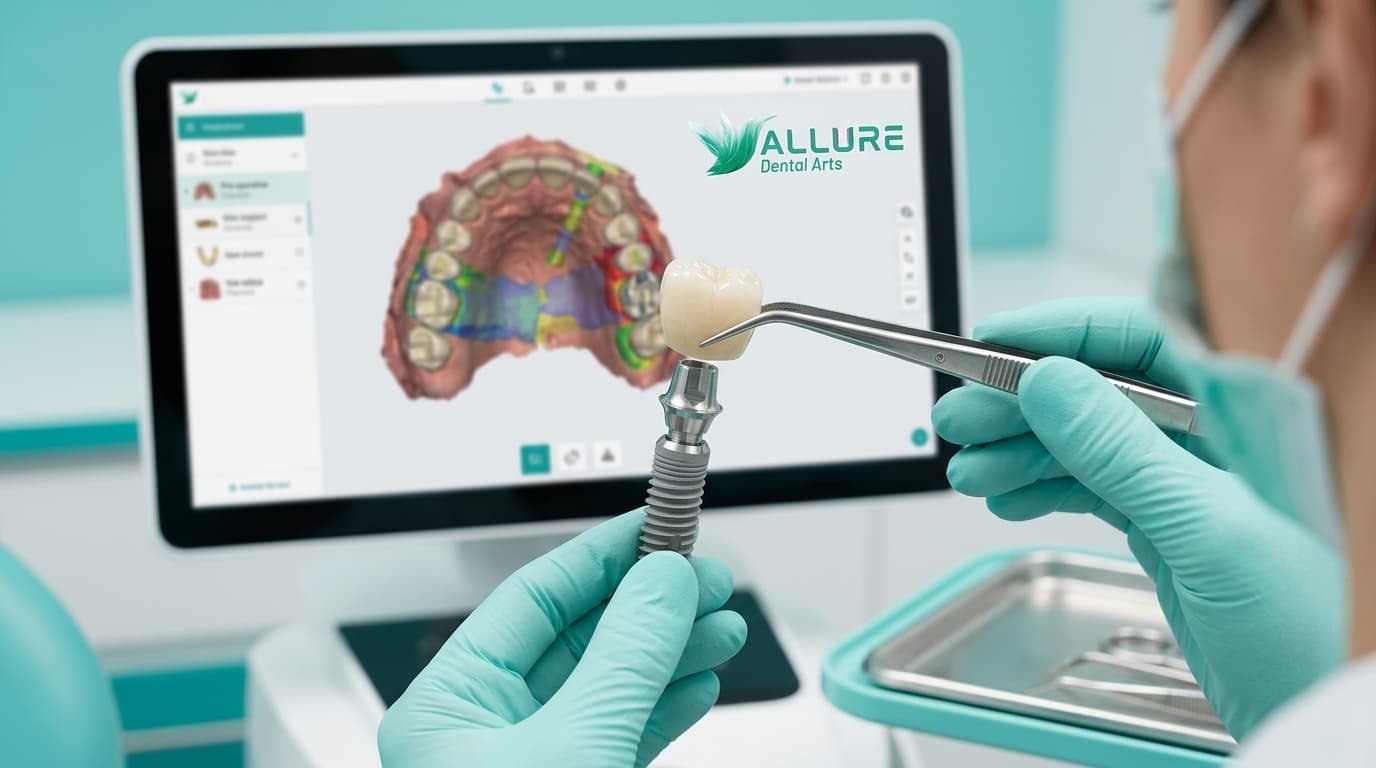
- Biocompatible Integration: Implants utilize small, medical-grade titanium posts that are surgically placed into the jawbone. Titanium possesses a unique biological quality called osseointegration—the ability to fuse directly with natural living bone tissue.
- Restoring Natural Stimulation: Once integrated, the titanium post acts as a permanent artificial root. Every time you chew, the post transfers natural forces directly into the bone tissue, re-triggering the body's natural cell renewal process.
- Preserving Facial Structure: By maintaining healthy bone volume, implants preserve your natural jawline, preventing the facial collapse commonly associated with long-term tooth loss.
3. Surprising Systemic and Oral Health Benefits
Preventing jawbone loss delivers a cascading series of health benefits that extend far beyond aesthetics:
Protecting Neighboring Tooth Roots
By maintaining high bone density in the jaw, surrounding natural teeth remain securely anchored in their original positions. This prevents teeth from tilting, loosening, or creating hard-to-clean bacterial traps.
Eliminating Denture Slipped Spots and Sores
Traditional full or partial dentures often become loose over time because the underlying jawbone constantly changes shape. Implants remain firmly anchored into healthy bone, eliminating painful rubbing, gum sores, and the need for messy adhesives.
Supporting Complete Nutrition
Preserving jaw structure ensures your bite force remains strong enough to chew fiber-rich, crunchy, and nutrient-dense foods like raw vegetables, nuts, and lean proteins, protecting long-term digestive and metabolic health.
4. Rebuilding Bone Density with Advanced Techniques
If you have been missing teeth for months or years, you may have already experienced some level of jawbone thinning. Fortunately, modern oral surgery makes it possible to restore lost bone density before placing permanent restorations.
Through gentle bone grafting procedures, biocompatible bone material is placed in areas of low density. Over a few months, your body uses this scaffolding to regenerate fresh, dense bone tissue—creating a sturdy, permanent foundation capable of supporting long-lasting dental implants.
Frequently Asked Questions (Q\&A)
How soon after a tooth extraction does jawbone loss begin?
Jawbone loss begins immediately following a tooth extraction, with the most rapid resorption occurring within the first 3 to 6 months. Seeking an evaluation for an implant promptly after losing a tooth helps preserve natural bone density before significant resorption occurs.
Can dental implants stop facial sagging caused by missing teeth?
Yes. Facial sagging occurs when the jawbone shrinks and no longer provides adequate structural support for facial skin and muscle tissue. Implants stimulate the jawbone to maintain its height and density, supporting your facial contours and preventing a prematurely aged look.
Will a traditional dental bridge prevent jawbone loss?
No. A traditional bridge suspended over the gums replaces only the visible tooth crown, leaving the space under the artificial tooth empty. Because there is no root stimulating the underlying jawbone, bone resorption will continue under a traditional bridge.
How do I know if I have enough jawbone left for an implant?
Your clinician will perform a 3D Cone Beam Computed Tomography (CBCT) scan to capture high-resolution, three-dimensional views of your jawbone height and width. This advanced imaging reveals exact bone density, allowing your doctor to determine if you are ready for placement or would benefit from a gentle preliminary bone graft.
Why Choose Allure Dental Arts for Your Implant Care?
At Allure Dental Arts, we focus on comprehensive, biologically centered treatments designed to protect your long-term health and wellness. Practice leader Dr. Farbod Youshei, DMD earned his Doctor of Dental Medicine from Roseman University of Health Sciences and began his career as a pharmacist — a background that informs his thoughtful, whole-patient approach to care.
Dr. Youshei’s advanced background in periodontics and bone biology ensures that every stage of your treatment—from initial 3D bone diagnostics and gentle grafting to surgical implant placement—is handled with precise, specialized expertise. Our multi-specialty team delivers evidence-based care in a peaceful, patient-focused environment.
Protect Your Jawbone and Facial Structure Today!
Don't let missing teeth compromise your jawbone health or facial aesthetics. Contact our friendly team today to schedule your comprehensive consultation in El Monte and the surrounding San Gabriel Valley.
- Brand Name: Allure Dental Arts
- Address: 11233 Valley Blvd, El Monte, CA 91731
- Phone: (626) 246-1200
- Website: https://alluredentalarts.com/
This article is general dental health information and is not medical advice. Treatment recommendations depend on each patient's situation — please call us with any questions about your own care.