A dental bridge replaces one or more missing teeth with a fixed restoration that is anchored to the teeth next to the gap. Unlike a removable partial denture, a bridge stays in your mouth — you brush it like a normal tooth and chew with it just the same.
What it is
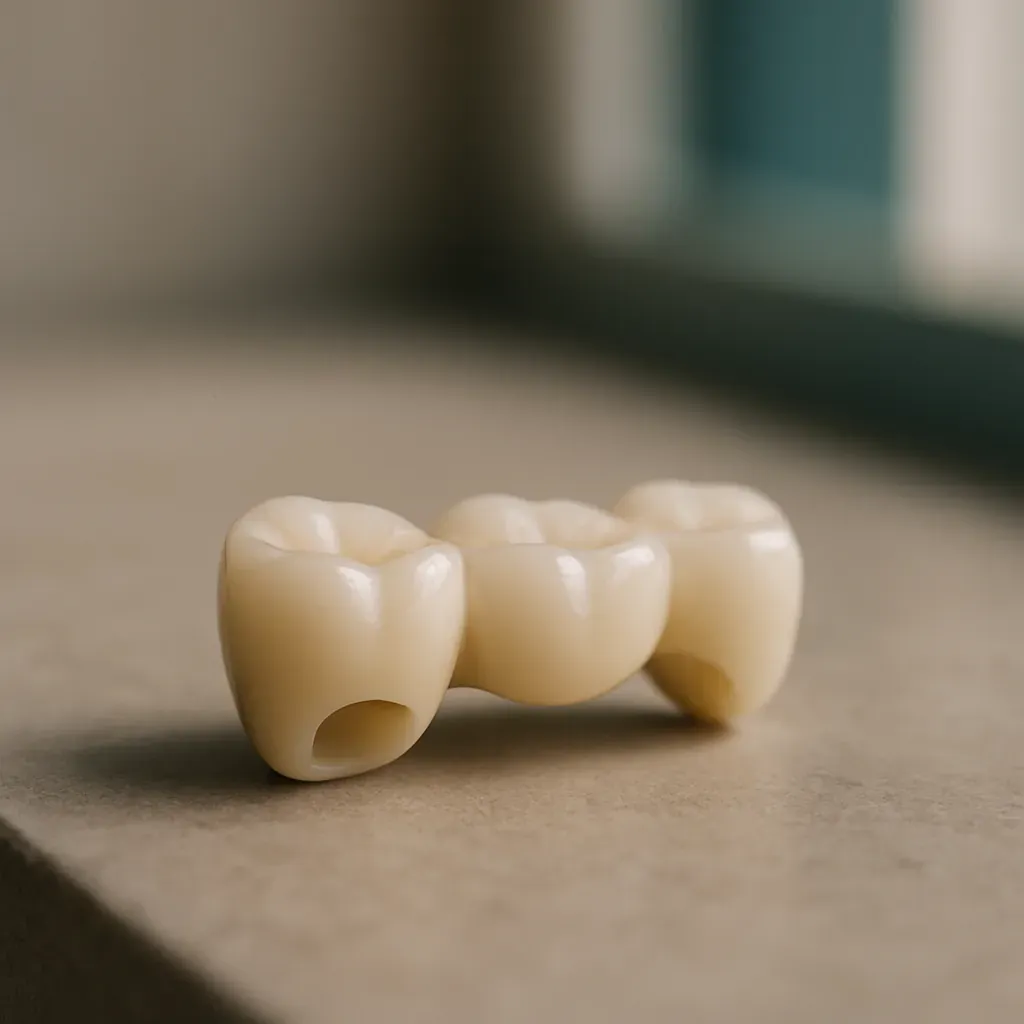
A bridge is a series of crowns connected together. Most bridges have at least three units: two crowns on the teeth next to the gap (called abutments) and one or more replacement teeth in the middle (called pontics).
We use bridges to:
- Replace a missing tooth without surgery
- Restore your ability to chew evenly
- Keep nearby teeth from drifting into the empty space
- Support your bite and your facial structure
Bridges can be made of porcelain, porcelain-fused-to-metal, or zirconia. The right material depends on where the bridge goes and how much chewing force it needs to handle.
What to expect
Most bridges take two to three visits to complete.
First visit (about 60 to 90 minutes):
- Your dentist numbs the area
- The teeth on either side of the gap are shaped to receive crowns
- We take an impression or digital scan
- A temporary bridge protects the prepared teeth while your permanent one is made
Second visit (about 30 to 45 minutes):
- The temporary bridge comes off
- We try in the permanent bridge and check the fit, color, and bite
- Once it feels right, the bridge is bonded into place
Some patients need a third short visit to fine-tune the fit. Most people adjust to a new bridge within a few days.
To keep your bridge healthy, you brush it like a normal tooth and use a floss threader or a water flosser to clean underneath. Your hygienist will show you how at your next cleaning.
Who it’s for
A bridge may be a good fit if you:
- Are missing one or a few teeth in a row
- Want a fixed solution instead of a removable partial
- Are not a good candidate for an implant — or prefer to avoid surgery
- Have healthy teeth on both sides of the gap
A bridge is not the only way to replace a missing tooth. Dental implants are often the longer-lasting choice, especially for younger patients. We will walk you through the trade-offs so you can pick the option that fits your situation, your budget, and your timeline.
This page is general information about a common dental procedure and is not medical advice. Treatment recommendations depend on each patient's situation — please call us with any questions about your own care.